
Insert the url of the feed you want to read here (e.g. https://news.google.com/news/rss/):
Or try one of the following: Ajaxian, BBC News, BBC China, Brent Simmons, CNN, Digg, Digital Point Forums, Flickr, Forex Events, Blog About Libraries, Google News, Harvard Law, Killer Startups, Movie Trailers, Poker Blog, Swimming, Yahoo! News
yahoo.com/news Top Stories
yahoo.com/news Top StoriesJudge halts construction on Trump’s arch — right after a federal panel approved it 6 Nov 2026, 5:50 am
Washington — A federal judge temporarily blocked the Trump administration from beginning construction on President Trump's proposed triumphal arch late Thursday, siding — for now — with a group of Vietnam veterans and the District of Columbia and Virginia, which sued to stop the project.
U.S. District Judge Tanya Chutkan ruled that the government cannot start any "construction-related activity" for 14 days, while further legal proceedings play out. In a 33-page ruling, Chutkan wrote that the plaintiffs are likely to succeed in showing the federal government did not follow required legal processes before moving to build the 250-foot triumphal arch. She also said Virginia and D.C. likely have standing to sue, pointing to "tangible economic harms" caused by traffic problems at the construction site.
The ruling came shortly after the National Capital Planning Commission voted Thursday night to approve plans for the arch, giving the final go-ahead for the monument that's set to be constructed between the Lincoln Memorial and Arlington National Cemetery.
The NCPC, which acts as the federal government's planning agency for the region and is stacked with Trump allies, voted 8-4 to greenlight the project after almost 9 hours of public comments from members of Congress, veterans, architects and Washington, D.C., and Virginia residents.
Chutkan's order aside, it's unclear how soon construction of the arch could start, though the Justice Department said in a court filing last month that it could begin as soon as Thursday.
In a separate filing Wednesday night, the Trump administration said that a construction company "may be — but is not necessarily — arranging off-site preparations for construction mobilization in anticipation of permit approval" at the site.
Ahead of the meeting, the NCPC's executive director, Mark Paoletta, recommended approval of the final site and building plans for the structure, which is supposed to celebrate 250 years of American independence.
Paoletta, the top lawyer at the Office of Management and Budget, heralded Mr. Trump's "historic vision" for the structure and said it would be the "grandest arch ever built by mankind."
But California Rep. Jared Huffman, the top Democrat on the House Natural Resources Committee, said during the hearing that the arch is "illegal" and would "disrupt the solemn connection" between the Lincoln Memorial and Arlington National Cemetery.
"This arch would dishonor America, our ideals, and our laws," Huffman said during remarks to the planning commission, adding that Congress is the appropriate body for debating the proposed monument.
One Marine veteran who spoke in opposition to the proposal, Jimi Shaughnessy, said "a dominating arch with a carnival-like atmosphere of tourists, food trucks and buses is abhorrent and insulting to those who gave all and to their families."
"Instead of focusing on the issues facing military families, this administration is intent on spending taxpayer dollars to site, plan, and design a monument no one asked for, and are content with bypassing any laws or regulations that may prevent them from breaking ground," he said.
The arch itself will be 166 feet tall and topped with "three gilded figures" — a gold, winged female figure flanked by a gold flying eagle on each side — bringing its overall height to 250 feet, according to documents filed with the NCPC. The structure will sit close to Ronald Reagan Washington National Airport, though the Federal Aviation Administration determined it will pose "no hazard to air navigation," with a "condition for safety lighting that includes a non-standard eternal flame and continuous floodlighting."
The arch will also feature an observation deck, and the Trump administration has estimated that it could draw between 2,000 and 22,400 visitors each day.
It's expected to take three years to build the arch, which will be located in the center of what is called Memorial Circle, across the Potomac from the Lincoln Memorial. It's unclear how much the project will cost, and who will foot the bill.
Mr. Trump said in September that his "Triumphal Arch" would be a "top grade Military Complex" and house drones and sniper ammunition. But the documents from the NCPC do not include the military usage.
Lawyers for the Justice Department declined to provide more details about the national security features in an October hearing.
The commission received more than 1,300 public comments about the project, most of which were in opposition, it said.
The NCPC's approval comes as Chutkan weighs how to act. A group of Vietnam War veterans, as well as the Commonwealth of Virginia and the city of Washington, D.C., have filed lawsuits arguing that the Trump administration is acting without congressional authorization and is not complying with the required procedures to construct the monument.
In an order Tuesday, Chutkan required the government to provide her notice within one hour of any NCPC vote and a thirty-minute notice to any preparation for construction of the arch to give her time to issue a decision on whether to block construction.
The government filed the required notices late Thursday, and Chutkan responded by issuing a temporary restraining order that blocked "construction, excavation, demolition, land-disturbance, utility installation, or roadway-closure activity, or any other construction-related activity" at the site.
In a hearing last month, Chutkan said the most important issue for her is whether the Vietnam War veterans had the legal right to sue. Earlier this year, the Supreme Court found that a group of plaintiffs who brought a similar suit to block the White House ballroom construction likely did not have legal standing to challenge the project.
In court filings, the Justice Department called the plaintiffs' motions "breathless" and urged Chutkan to follow the Supreme Court's decision in the White House ballroom case, but attorneys for the groups of plaintiffs argued that their legal arguments were different than the ballroom case and urged Chutkan to halt the arch's construction.
Two of the plaintiffs, Vietnam veterans Michael Lemmon and Shaun Byrnes, told Chutkan in a hearing last month that the arch construction would impact their experience when visiting graves at Arlington National Cemetery, and said they would be harmed by the arch's size and purpose.
In a separate suit brought in late October, Virginia and the District of Columbia sued, and the case was assigned to Chutkan, who had heard arguments the day before from the Vietnam veterans group. The state's attorneys general argued that "as soon as Defendants break ground on this project, they will inflict irreparable harm" on them because "the Arch project will inevitably snarl traffic between the jurisdictions, produce pollution and stormwater runoff in the Potomac, interfere with emergency services, and pose numerous other challenges."
This article originally appeared on CBS News at https://www.cbsnews.com/news/trump-arch-approval-national-capital-planning-commission/Hegseth strikes defiant tone in face of impeachment threat 6 Nov 2026, 4:10 am
Defense Secretary Pete Hegseth on Thursday dismissed a renewed effort in the House to bring articles of impeachment against him as early as next week.
In a video on social media, Hegseth said, “A disgruntled, defeated congressman, along with all his Democrat allies, has also dropped sham articles of impeachment against yours truly, just like they tried against President Trump twice.”
Hegseth was referring to Rep. Thomas Massie, R-Ky., who said Wednesday that he plans to reintroduce articles of impeachment when the House is back in session. Lawmakers are scheduled to return to Washington on Monday.
“It’s all about the politics of personal destruction,” Hegseth added. “Didn’t work against President Trump, and it won’t work with me. You can rest assured of that.”
In the more-than-five-minute video, Hegseth only briefly touched on the Iran war — a driving force behind the effort to impeach him, as well as GOP losses in this week’s midterm elections.
Massie, who lost his GOP primary after he crossed Trump, urged Trump on Thursday to replace Hegseth while he still has a GOP majority in the Senate.
“My Hegseth impeachment resolution is a much gentler version of what’s coming when Dem’s control Congress. They’ll have hearings & trials,” he said on X.
“There is one contingency in which I won’t reintroduce the articles of impeachment: Hegseth resigns,” Massie wrote Wednesday.
Numerous Democrats have indicated a desire to oust Hegseth since their midterm election wins, including House Minority Leader Hakeem Jeffries of New York, who is poised to be the next speaker.
Trump said Wednesday that he is not planning to replace Hegseth, and he said Thursday that Hegseth “has done a fantastic job” and “probably has opposition” over the actions he has taken, including purging military leadership.
Trump has told some allies he is considering replacing Hegseth, asking them who they think should succeed him, two people familiar with discussions told NBC News this week. He has previously insisted that he was not considering dismissing department heads just days before they were shown the door.
Massie tried to force a vote on impeaching Hegseth in September, but his efforts were stunted when House Speaker Mike Johnson, R-La., sent the House home early.
He would need several Republicans to join all Democrats in supporting the impeachment measure for it to succeed.
The House has impeached only two Cabinet officials in history — former President Joe Biden’s homeland security secretary, Alejandro Mayorkas, in a partisan vote, and William Belknap, the secretary of war in the 1870s. No Cabinet members have ever been convicted by the Senate.
This article was originally published on NBCNews.com
This article originally appeared on NBC News at https://www.nbcnews.com/politics/trump-administration/secretary-pete-hegseth-defiant-tone-impeachment-threat-thomas-massie-rcna607788
Texas's governor-elect vows to protect state's citizens from data centers 6 Nov 2026, 2:28 am

Texas Gov.-elect Gina Hinojosa (D) vowed to protect Texans from data center projects after she is sworn into office in January.
“Well, we have always been a pro-business state in Texas, but what changes now with me as governor is it has to be a partnership that benefits Texans,” Hinojosa said during an appearance on CNN on Thursday night. “And right now, what has happened is data centers have moved into mostly rural communities, and there are no rules and laws to protect Texans, and Texans are being taken advantage of.”
She plans to implement “laws to protect Texans” and to stop working with data centers “until we have those protections.”
“We can have a strong economy, strong industry, and protections for the people of Texas. Those things are not mutually exclusive, and I'll make sure, as governor, I lead to ensure that that happens,” she expressed.
CNN's Jake Tapper clarified that Hinojosa is not ruling out data centers being built in the Lone Star State, but that the incoming governor wanted “there to be regulations to protect communities. Is that right?”
“And that communities have a seat at the table to decide if and how these data centers come into their communities. Texas is like a country. We are so diverse in all ways,” Hinojosa responded. “So, absolutely, we need to make sure they are partners in this effort, and that has always been my position. It is not that I hate data centers. I hate the way they are taking advantage of Texas, and that stops when I'm governor.”
Hinojosa’s defeat of outgoing Texas Gov. Greg Abbott (R) happened alongside Democratic wins down the ticket. Abbott conceded and told supporters that he would “assist her and her team in a period of transition.”
While on the campaign trail, Hinojosa took the populist approach toward data centers, tuning into voters’ sentiment about the ultrawealthy who may own the facilities.
She previously vowed to establish a moratorium on data center construction throwing existing data center build-out in Texas into uncertainty.
Worry about Hinojosa’s positions has caused Texas state Rep. Brian Harrison (R) to call on Abbott to curb her power before next year. He warned in a social media post that Hinojosa should not have “unchecked emergency powers,” and that “the urgency is undeniable… and inaction is intolerable.”
Copyright 2026 Nexstar Media, Inc. All rights reserved. This material may not be published, broadcast, rewritten, or redistributed.For the latest news, weather, sports, and streaming video, head to The Hill.This article originally appeared on The Hill at https://thehill.com/homenews/state-watch/6203045-texas-hinojosa-data-centers/

Indiana, Florida and Alabama carry out executions on the same day 6 Nov 2026, 1:42 am
For the second time this year, three executions by lethal injection were carried out on the same day, this time in Indiana, Florida and Alabama.
An Indiana man who admitted killing his girlfriend's two children was executed in the early morning hours Thursday. Jeffrey Weisheit killed the children, ages 8 and 5, by setting fire to his girlfriend's house in the Evansville area in 2010.
Weisheit died at the Indiana State Prison in Michigan City. The lethal injection started just after midnight and he was pronounced dead at 12:45 a.m. local time, according to Noelle Russell, Indiana Department of Correction chief communications officer.
She said Weisheit's final meal was barbecue ribs and he had no final words. Weisheit was Indiana's first execution of the year.
Early Thursday evening, Florida carried out its record-tying 19th execution of the year.
Jesse Guardado, 64, was pronounced dead at 6:13 p.m. local time following a three-drug injection at a state prison in Starke.
Guardado had pleaded guilty to fatally stabbing a 75-year-old woman inside her Walton County home in 2004 before stealing her jewelry box, $80 and other valuables to buy drugs. The woman had helped him get a job and housing.
A federal appeals court in 2024 said Guardado, now 64, had received a "full and fair" hearing during the death penalty phase of his case.
In Alabama, 54-year-old Michael Taylor received the last lethal injection of the day for his conviction in the killing of an elderly man and woman in a 1991 home robbery.
Taylor was pronounced dead at 6:10 p.m. local time. The execution got underway shortly before 6 p.m. as Taylor replied "no sir" when asked if he had any final words.
He appeared to mouth "thank you" toward his attorneys seated in the witness room. Taylor's spiritual adviser approached and prayed with him, and he closed his eyes, never opening them again.
This marked the second time this year that three people in the U.S. were put to death on the same day. Alabama, Tennessee and Oklahoma conducted executions on Aug. 13.
The death penalty has faced renewed scrutiny following the September failed execution of Christa Pike in Tennessee, although courts have rejected efforts to halt other executions since she survived two lethal doses of pentobarbital.
Pike said in a statement dictated to her lawyers and released a month after the botched execution that she's been in pain every moment since she woke up confused in a hospital. "I had not contemplated life beyond that night," she said.
Lawyers had wanted Indiana Republican Gov. Mike Braun to allow Weisheit, 50, to undergo brain scans in an effort to reinforce their argument that he has a history of head injuries and mental health problems. Braun declined, and he also turned down a request to reduce the sentence to life in prison.
Weisheit's latest objection centered on the state's planned use of lethal drugs purchased from a pharmacy that is facing a disciplinary hearing next week at the Indiana Pharmacy Board. The Indiana Department of Correction said it's confident "in our ability to humanely carry out" the execution.
Following the execution, Braun issued a brief statement noting Weisheit's case was reviewed many times by state and federal courts.
"These reviews have never resulted in an overturned sentence," he said. "Today, Weisheit's sentence has been carried out as ordered by the court."
Indiana Attorney General Todd Rokita said that the execution provided "long-awaited justice for Alyssa Lynch and her brother Caleb, two innocent children whose lives were stolen in an act of unspeakable cruelty."
Florida, meanwhile, has carried out more than half of the 34 executions so far this year in the U.S. Outgoing Republican Gov. Ron DeSantis has made aggressive use of the death penalty like few other governors.
Taylor was executed by Alabama 35 years after fatally beating an older couple with a metal bar during a robbery in their Gadsden home. Police arrested the 19-year-old Taylor with the victims' Cadillac, an hour away in Birmingham. The execution was the state's third this year.
Death penalty opponents had urged Republican Gov. Kay Ivey to reduce Taylor's sentence to life in prison, noting his age and immaturity at the time of the killings.
"If the state kills Michael, it is not the 19-year-old who made the worst mistake of his life who it kills. But the mature, well-respected, God-fearing man sitting in that cell today," said Esther Brown of Project Hope to Abolish the Death Penalty.
Ivey declined, however. She called Taylor's actions "reprehensible" in a statement following his execution, adding the couple had opened their home to him and "Mr. Taylor repaid the Moores by beating them to death with a metal bar, all to rob them for money to buy clothing and jewelry."
She also took a jab at California's Gov. Gavin Newsom for planning to commute all death sentences there.
"California may let their criminals escape justice, but not Alabama. Here, we enforce the law and always will," Ivey said at end of the statement.
The state executed Taylor by lethal injection after a judge declared a nitrogen gas method unconstitutional. His attorneys objected to the last-minute switch to lethal injection since he selected nitrogen gas as his method several years ago, but a judge ruled against Taylor.
The defense attorneys said Taylor "knew the depth of the harm he caused" and "grieved it for the rest of his life," adding he became a changed person in prison and that "Michael's life was proof that God isn't finished with any of us."
This article originally appeared on CBS News at https://www.cbsnews.com/news/3-us-executions-same-day-second-time/
Republicans face a crowded agenda and little time before handing Congress to Democrats 5 Nov 2026, 10:24 pm
Republicans on Capitol Hill are on the clock. They have less than two months left in power before the new, Democrat-led Congress is sworn in and their window of unified control in Washington, D.C., comes to an end. Even as the votes are still being counted, GOP leaders have been putting together plans for what they hope to accomplish before they lose power.
“Our job is nowhere close to being finished yet,” House Speaker Mike Johnson reportedly told attendees at a watch party Tuesday night as Democratic victories piled up.
The period between the November election and the day in early January when new lawmakers are sworn in, often called the “lame duck” session, can be quite productive as lawmakers move with urgency to get things done while they still can. Some of the most important actions taken by Congress in modern history — the legislative response to the Watergate scandal, the Clinton impeachment, the creation of the Department of Homeland Security and several Supreme Court confirmations — all happened during various lame duck windows.
Republicans will have a long list of priorities when Congress reconvenes on Monday, but there are also plenty of potential hurdles that could hinder their progress. Here’s a look at what congressional Republicans want to do and some of the possible curveballs that could derail their plans.
What needs to get done
Congress will have two “must-pass” items on its agenda when it gets back to work next week: avoiding another government shutdown and passing an annual defense policy bill. Leaders from both parties say they want to get both bills done, but disagreement on the specifics could make for a bumpy and time-consuming process.
The government will shut down again on Dec. 12 if Congress doesn’t pass a funding bill to keep it open. After enduring the two longest shutdowns in history over the past two years, neither party appears eager to let another one happen. The big point of disagreement could be timing. Republican leaders are reportedly eyeing a bill that would lock in current spending levels for a full year, but Democrats have an incentive to advocate for a short-term bill that sets them up to enact their own spending priorities once they’re in full control of Congress.
Negotiations over the defense budget could be even thornier. The Trump administration has asked Congress for $1.5 trillion in military funding for 2027. Democrats have balked at that number, demanding that the price tag be reduced by hundreds of billions of dollars. Reports suggest that the administration may be open to shrinking its budget request, but landing on a final number that both parties and the president can agree on could prove challenging — particularly if the White House insists on including more funding for the war with Iran.
“I don't know what [Trump’s] going to want. I don't know how we're going to figure out the money. So no, I don't have easy answers to that,” Rep. Adam Smith, the top Democrat on the House Armed Services Committee, told Politico on Wednesday.
Even if both bills eventually get passed, drawn-out negotiations could eat up precious time and leave little room for Congress to do much else before the end of the year.
Republicans’ ‘Last Supper’
In the wake of Tuesday’s losses, some Republican lawmakers have begun advocating for their party to pass one last major budget bill jam-packed with GOP priorities. To do that, they’d need to use the same process they utilized to pass Trump’s One Big Beautiful Bill, which creates a pathway to circumvent the Senate filibuster and approve legislation without any Democratic votes.
“It’s time to wake up and smell the coffee,” Trump adviser Jason Miller told GOP lawmakers on Wednesday. “You have one job. Get everything on President Trump’s agenda through in the limited days we have.”
Before the election, Republican Sen. Bernie Moreno told reporters that he would push for a “giant” spending package during the lame-duck session if the GOP lost both chambers of Congress.
“It’ll be the Last Supper,” he said.
Actually getting another Republican megabill passed could be a steep challenge. Negotiations over the massive list of complex provisions within the One Big Beautiful Bill took months and consumed big chunks of the congressional calendar.
Republicans may also have a numbers problem. Any bill they put forward would need near-unanimous support within their party in both chambers. That includes outgoing senators Thom Tillis of North Carolina and John Cornyn of Texas, who have been at odds with the president in the late stages of their time in Congress.
Republicans also have other, less ambitious priorities that could be at risk if they dedicate their time and energy to another huge party-line budget bill. One of those priorities is a bipartisan proposal to overhaul the permitting process for energy projects, which would make it easier to build both renewable and fossil fuel infrastructure. There’s also a sweeping slate of reforms to college sports, a number of Trump-nominated judges awaiting confirmation, cryptocurrency legislation and more that could end up on the GOP’s long to-do list.
Potential curveballs
One of the biggest questions looming over Washington, D.C., since Tuesday is whether any of the Supreme Court’s conservative justices might retire during the lame-duck session. With Democrats pledging to prevent Trump from putting another “right-winger” on the court, this could be a conservative justice’s last chance — potentially for years — to retire with the confidence that their replacement is likely to share their ideology.
Neither of the court’s two oldest justices, Samuel Alito and Clarence Thomas, has given any indication that they’re considering stepping down — in fact, Alito has reportedly been unequivocal about his plans to stay on the bench. But if one of them did, Republicans would be heavily incentivized to put everything else on the back burner to rush the confirmation of their replacement before Democrats gain the power to block Trump’s nominees for the rest of his presidency.
Republicans’ calendar may also get scrambled by some of their own outgoing members. Rep. Thomas Massie, a Kentucky Republican who has been a key voice behind the push for disclosures about the investigation into Jeffrey Epstein, has said he plans to force a second vote on the issue before he leaves Congress.
Massie has said he’s also planning to introduce articles of impeachment against Defense Secretary Pete Hegseth, who has faced heavy scrutiny for his role in carrying out the war in Iran. Tillis recently told CBS News that Hegseth faces a “reckoning” when Congress reconvenes next week.
It’s unclear how much support Massie’s impeachment effort has in the House, but even if it failed, it could consume valuable time Republican leaders would rather spend on other priorities. The same would be true of confirmation hearings for a new defense secretary if reports that Trump is considering firing Hegseth prove to be accurate.
This article originally appeared on Yahoo News at https://www.yahoo.com/news/politics/article/republicans-have-control-of-congress-for-2-more-months-heres-what-they-hope-to-get-done-222459712.html
Too close to call: How the Mississippi Senate race turned into such a nail-biter 5 Nov 2026, 9:50 pm
Mississippi is one of the reddest states in America, so this year's U.S. Senate race between Republican incumbent Cindy Hyde-Smith and her Democratic challenger Scott Colom wasn't supposed to be especially close.
Now it couldn't be closer.
As of Thursday afternoon, Colom was leading Hyde-Smith by a mere 1,724 votes, according to the Associated Press. That's just 0.19% of all ballots cast. As a result, the AP has yet to call the contest, even though 96% of the vote is in.
Along with Alaska — which also remains too close to call — the outcome in Mississippi will determine whether Democrats can expand their new Senate majority beyond its current size (54 seats) by flipping even more red states than they already have.
But Alaska was supposed to be a toss-up. Mississippi wasn't really on the national radar. President Trump won the state by 23 percentage points in 2024 — his third straight win there. Looking ahead to the 2026 Senate race, analysts said it was a "likely Republican" hold. Barely anyone bothered to poll it.
Yet, here we are, with Colom edging Hyde-Smith as officials tally the final votes. How did the Mississippi Senate race get so close — and what happens next?

Who is Scott Colom?
Colom, 43, was born in Columbus, Miss., to two lawyers who also participated in politics. In 1987, his father, Wilbur, ran for state treasurer as a Republican; his mother, Dorothy, served as the first Black Chancery Court judge in their home district. Colom earned his JD from the University of Wisconsin in 2009 and went on to serve as the first Black justice court judge in Lowndes County, Miss., before becoming the first Black city prosecutor in Columbus.
In 2015, Colom defeated a nearly 30-year incumbent to become the first Black district attorney elected in a majority-white voting district in Mississippi history. He has since prosecuted a number of high-profile murder and sexual assault cases.
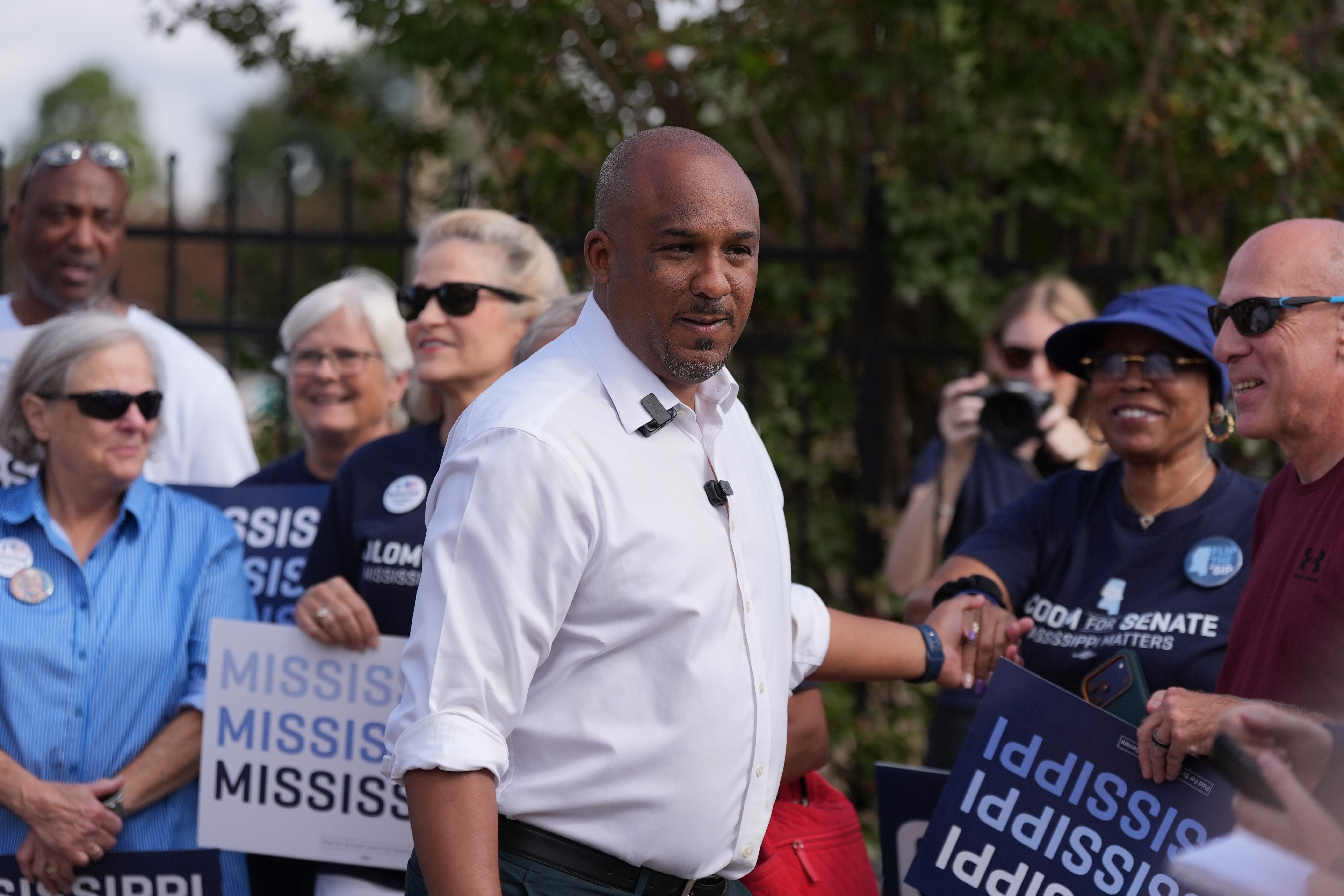
In 2022, President Joe Biden nominated Colom to serve as federal judge for the Northern District of Mississippi. Leading Magnolia State Republicans — including Sen. Roger Wicker and former Govs. Phil Bryant and Haley Barbour — backed Colom's nomination.
"I have known two generations of the Colom family for over 20 years and believe Scott Colom possesses the discernment to be a fair and exemplary judge," Bryant told the New York Times.
But Hyde-Smith blocked Colom's nomination in the Senate, citing support his 2015 campaign received from a political action committee funded by George Soros and claiming that he favored allowing transgender athletes to compete in girls' and women's sports. The White House characterized Hyde-Smith's concerns as "spurious."
In a letter to Hyde-Smith urging her to reconsider, Colom confirmed that he had signed a letter with other prosecutors condemning efforts to criminalize gender-affirming care for transgender people, but insisted that their joint statement "did not comment on legislation specifically related to participation in athletics." Colom also said he had not known about Soros's contributions to the Mississippi Safety and Justice PAC "until I read about them in my hometown paper."
Colom's unsuccessful nomination was returned to Biden on Jan. 3, 2024. In September 2025, Colom announced his U.S. Senate candidacy.
How Colom caught up
Hyde-Smith, 67, is a former lobbyist and state legislator who was serving as Mississippi's agriculture and commerce commissioner when she was appointed to the U.S. Senate in 2018 following the resignation of Republican Sen. Thad Cochran. She won a 2018 special election and a 2020 full-term election, and she has served in the Senate ever since.
There were signs before Tuesday that Hyde-Smith might be vulnerable to "voter apathy," as one Mississippi State University political science professor recently put it. Sen. Wicker won reelection in 2024 by 25 points; Hyde-Smith's margin of victory in 2020 was less than half that. And while the only polls made public this cycle showed Hyde-Smith ahead, her leads were stuck in the single digits — no survey put her support above 50%. One April Democratic poll showed Hyde-Smith trailing a hypothetical "someone else" 33% to 53%.

Regardless, Hyde-Smith seemed content to coast to reelection, barely bothering to appear on the campaign trail. But Colom didn't have that luxury — and when he cut a viral campaign ad about beef prices in mid-October, the tide started to turn.
Asked earlier this year about soaring costs, including the price of beef, Hyde-Smith told local TV station WLOX that "all commodities go through peaks and valleys," but "you have so many proteins to choose from."
In the final weeks of the campaign, Colom seized on Hyde-Smith's remark about "proteins" to mock her with a spot featuring incredulous Mississippians grilling burgers, dining out and shopping for groceries — and saying they'd rather "pick another senator instead" (along with other, more colorful language). The video has since racked up nearly 14 million views on Colom's X account.
When the ad took off, national Democrats sprang into action. The Senate Majority PAC poured $2.2 million into the race; Senate Democrats' campaign arm contributed another $500,000. Former President Barack Obama filmed an endorsement ad. Former President Bill Clinton, former Vice President Kamala Harris and Sens. Cory Booker of New Jersey and Raphael Warnock of Georgia rushed to Mississippi to rally with Colom. In response, Republicans were forced to play defense, sending Trump to Mississippi in the final days of the campaign (along with cash infusions of their own).
She done lost her damn mind. pic.twitter.com/wHPt4PSAob
— Scott Colom (@scott_colom) October 13, 2026
In the end, it wasn't enough to give Hyde-Smith a decisive victory on Election Day. When Trump came to Mississippi, Colom went to his event to talk to rally-goers about health care, grocery bills and gas prices.
"I got the best message ever for Republican voters in Mississippi," he told CNN afterward. "I'm going to get you what you were promised in 2024. You were promised lower grocery prices on Day One. That's what I will fight for. You were promised no more endless wars. That's what I will fight for. You were promised the full and transparent release of the Epstein files. That's what I will fight for."
According to preliminary New York Times estimates, Colom performed 19 points better among white Mississippi voters than Harris, the 2024 Democratic presidential nominee. He won new voters — that is, those who didn't vote in 2024 — by 25 points.
What happens next
The contest between Colom and Hyde-Smith hasn't been called yet because officials are waiting on two remaining batches of ballots.
The first batch comes from 11 counties that have yet to report 10% or more of their returns. The other batch contains affidavit ballots, which were generally cast by people who did not present an acceptable photo ID at the polls or who had been marked as inactive on voter rolls.
County clerks in Mississippi have 10 days — in this case, until Nov. 13 — to certify the election.
Five of the counties with outstanding ballots have favored Colom, including Hinds County (the most populous in the state). Five have favored Hyde-Smith. One is a toss-up. Any mail ballots from those counties must arrive by Tuesday, Nov. 10, in order to count.
As for the affidavit ballots, voters need to validate them with an acceptable ID by the same day: Nov. 10. The Colom campaign has said that roughly 10,000 to 15,000 affidavit ballots were cast this year.
Colom's team believes his lead will expand once those affidavit ballots are counted. (It has already grown by more than 1,500 votes since Election Day.) Ahead of Mississippi's March primaries, incorrect Experian information mistakenly led to the inactivation of legitimate voters — and inactivations have more than doubled in some jurisdictions since then. Discrepancies caused confusion and long lines at polling places on Tuesday, forcing affected voters to cast affidavit ballots.
"We are going to make sure every single vote has been counted, and I am confident we will ultimately flip this seat," Colom wrote on X on Wednesday morning. He added on Thursday that "my campaign, alongside the [Democratic Senatorial Campaign Committee] and Elias Law Group, Lisa Ross, and our great team of local attorneys, are leading the effort to ensure every eligible voter is heard."
Hyde-Smith also expressed confidence on Election Night. "We still don't have all the votes in, so we're not calling all of it tonight, but we're in a very good lead and I assure you, I will continue to be your U.S. Senator," she told supporters at the time.
On Thursday, Mississippi Republican Party chairman Mike Hurst estimated that about 20,000 ballots had not been counted yet. "We are enthusiastic about these outstanding ballots because a number of these, a significant number of these, we believe, are in and remain in Republican-leaning districts, precincts and counties throughout the state," Hurst told reporters.
Mississippi is the only state in the country without a recount law. But if the margin is still razor-close next week, Colom or Hyde-Smith could challenge certain ballots in court. That would likely happen after certification on Nov. 13.
Lawyers for Hyde-Smith and her campaign have formally written to Mississippi state officials to demand “the immediate separation, secure custody, and preservation of all affidavit ballots,” according to the New York Times — a signal that they may pursue litigation if those ballots put Colom over the top.
This article originally appeared on Yahoo News at https://www.yahoo.com/news/politics/article/how-the-mississippi-senate-race-between-scott-colom-and-cindy-hyde-smith-got-so-close--and-what-happens-next-212946040.html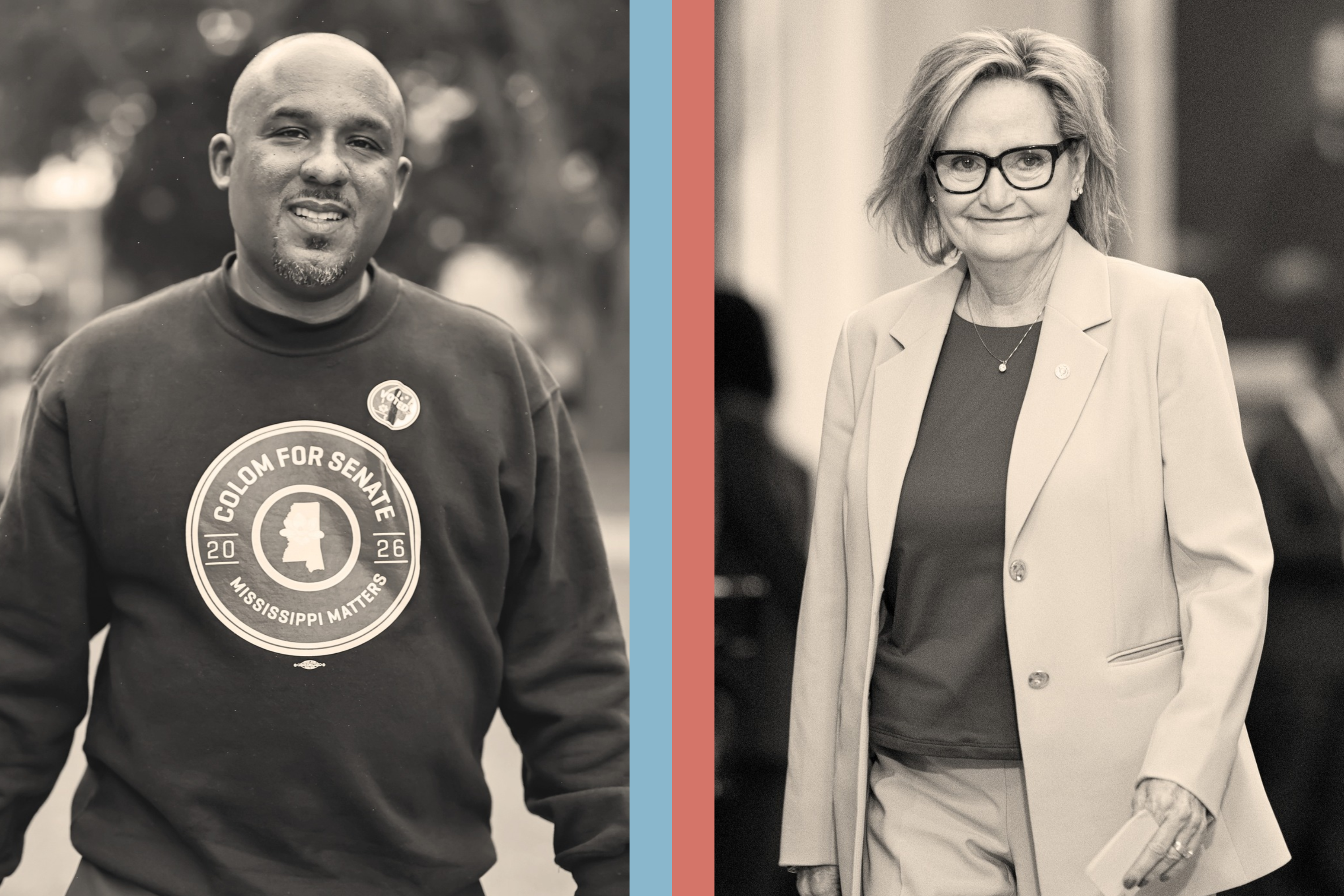
Trump makes the Oval Office a national monument, but his gold decor isn't protected 5 Nov 2026, 9:19 pm
WASHINGTON (AP) — President Donald Trump on Thursday signed a proclamation that he says will preserve the Oval Office and Cabinet Room as a national monument, his first official action after his party was swept aside in midterm elections on Tuesday.
But the action does not prevent future presidents from restyling the iconic office that Trump has filled to the brim with gold flourishes, nor does it prevent a successor from rolling back the proclamation itself. Trump himself has reversed national monument designations made by his predecessors.
Trump, however, described the Oval Office order in expansive terms. "It will not be allowed to be touched by anybody, destroyed, ripped down by stupid people, in order to build something in a slightly different shape," Trump said. "We like the Oval Office, and it's a symbol, like the White House itself."
It was the third day this week that the president, a real estate mogul, delivered remarks fixated on his pet projects in Washington. On Wednesday, a day after Republicans suffered defeats in key races across the country, Trump gathered reporters to sign the final beam being raised during construction of his opulent ballroom project. On Monday, he went to the Lincoln Memorial Reflecting Pool to talk about his renovation of the landmark.
The proclamation, released after Trump's remarks, says that nothing in it will "restrict the President's authority to redecorate the monument, select furnishings, or make ordinary operational and security modifications that do not substantially impair the monument's historic structure or architectural character."
It orders the Interior secretary to manage the Oval Office and requires "documentation, review, and consideration of alternatives before any action that would substantially alter or demolish the monument." Trump separately said any major changes would need review from Congress, though such a requirement is not in the document's text.
"If they want to say, 'Let's not have oval anymore, let's make it square,' what happens is they have to go back to Congress and hopefully the Congress, the people in Congress, will be smart enough not to let that happen," said Trump — who notably demolished the East Wing of the White House to make room for his ballroom.
A red baseball cap with "VETO" on the front was sitting on the Resolute Desk as Trump signed the document, a not-so-subtle nod to the shifting of powers in Congress.
His effort to preserve changes at the White House comes as Democrats gear up for new scrutiny of Trump. Connecticut Sen. Richard Blumenthal, the top Democrat on the Homeland Security Committee's Permanent Subcommittee on Investigations, sent a flurry of letters Thursday to known donors to Trump's ballroom, demanding that they provide information or face "alternative measures to obtain compliance."
Since returning to the White House, Trump has overseen numerous design changes to various rooms, including the Oval Office, where he has filled the wall space with portraits, a copy of the Declaration of Independence and numerous golden accents.
As he talked about his interior decorating decisions, Trump highlighted new chandeliers that he says were installed in the Cabinet Room to address "very bad lighting." His other additions to the Oval Office include numerous gold wall appliqués and gold-framed portraits.
Trump did not elaborate on precisely what he was hoping to prevent but suggested that the Oval Office might face some threat in the future. Trump himself has faced several lawsuits alleging that his Washington beautification projects were done without the necessary approval.
"If anybody ever decides to come and start knocking down walls, you call me wherever I may be," Trump said, "and I'll come back here and I'll make sure it never happens."
This article originally appeared on Associated Press at https://www.yahoo.com/news/politics/articles/trump-signs-proclamation-says-prevent-211941244.html
'Tax the rich' (mostly) wins in ballot measures across the country 5 Nov 2026, 8:16 pm
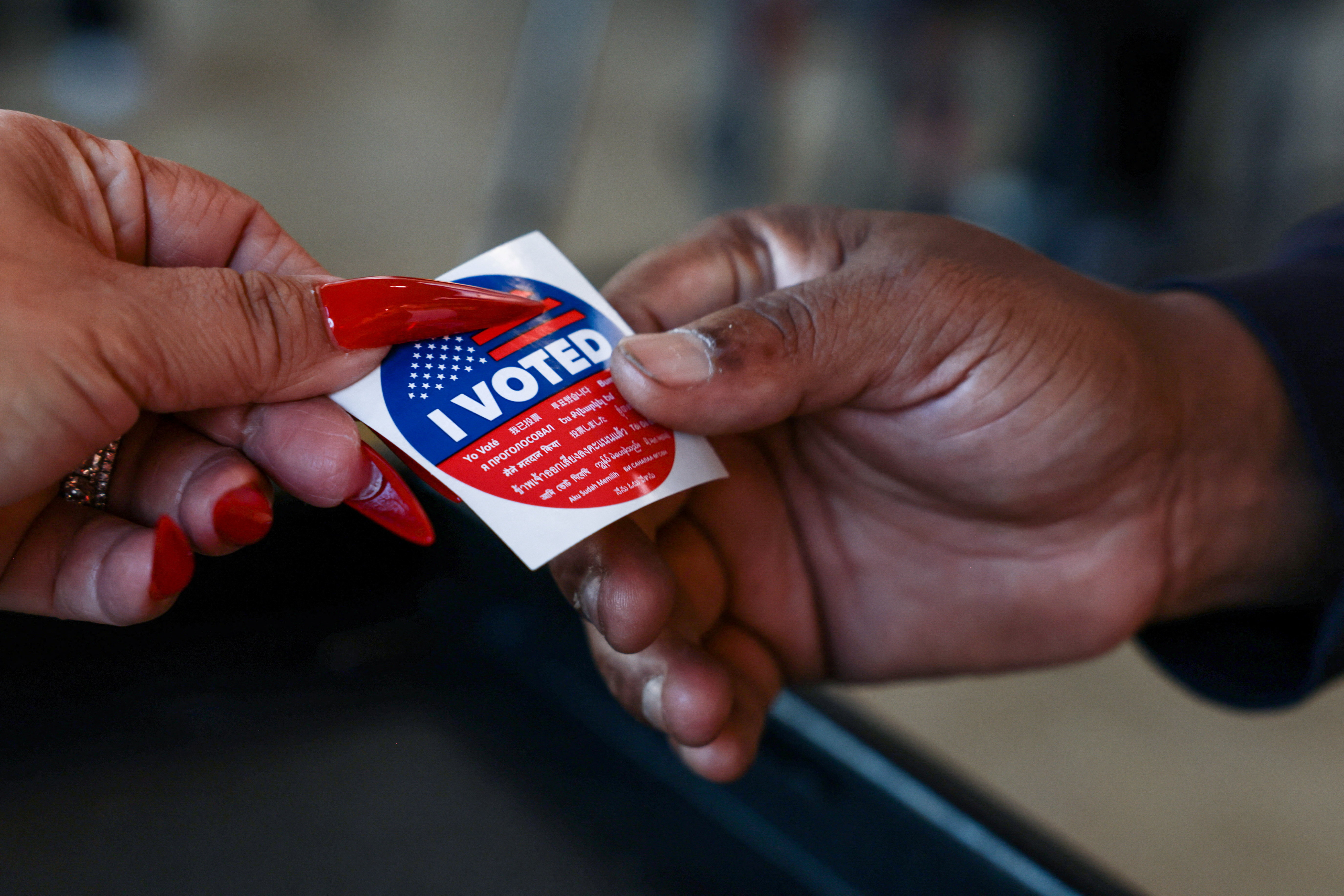
Voters weighed in on tax ballot initiatives across at least 10 states this week, returning verdicts that demonstrate plenty of “tax the rich” sentiment despite the likely failure of California's high-profile plan for a wealth tax.
Other successful measures sought to limit taxes on Americans of more modest means either through new caps on state income taxes or lower property taxes.
Voters' affordability worries ran, "at least in part, through the tax code," as the Tax Foundation summarized the results in a wrap-up of the races.
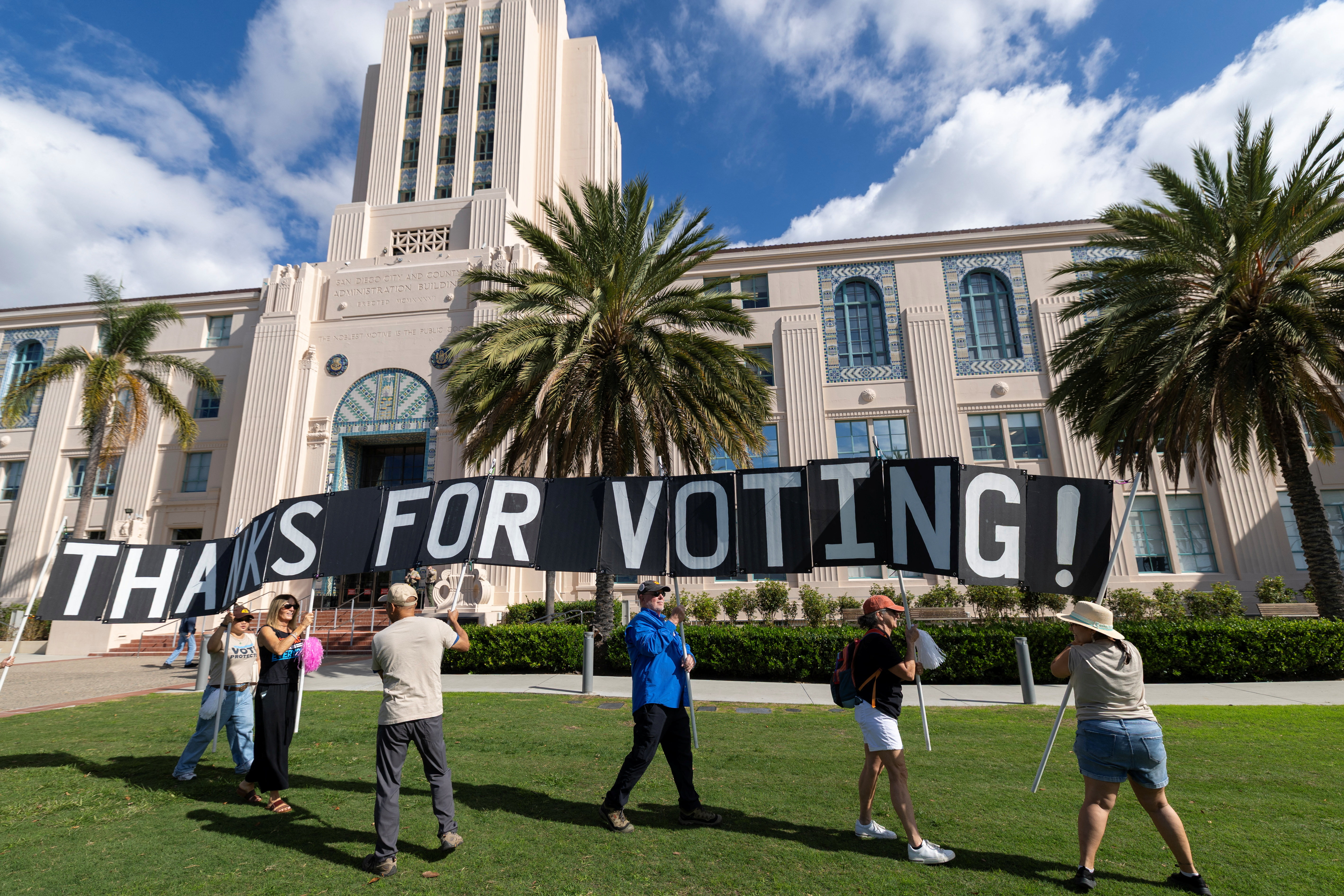
In California, a billionaire tax imposing a one-time 5% wealth tax on state residents and trusts with assets over $1 billion appeared on track to fail, after voters cooled on the effort as the campaign wound down.
But proponents of other taxes on the rich counted plenty of wins, including elsewhere on California's ballot.
The state's voters approved permanently higher tax rates on incomes starting at $250,000 in a separate measure that solidified rates first approved in 2012 to fund education.
Elsewhere in the US, a "millionaires tax" in Washington state survived with 58% of voters rejecting a proposal to repeal a new 9.9% tax on individual and household wage income above $1 million per year to fund education, healthcare, and other priorities beginning in 2028.
Colorado is on track to narrowly pass a measure to raise taxes on its richest residents. That initiative aims to raise rates on incomes above $500,000 and tops out at 8.4% for incomes over $1 million.
"In three of four cases, voters showed their support for taxing the rich," the left-leaning Institute on Taxation and Economic Policy said in an analysis of state tax ballot measures, calling it a win for tax fairness.
(The California wealth tax initiative and the Colorado measures have not yet been formally called by the Associated Press, so the results could change.)
A range of measures to limit taxes
Elsewhere in the nation, voters put a cap on future tax increases.
North Carolina voted to permanently cap state income taxes at 3.5% and approved a second measure to limit property taxes imposed at the local level.
Iowa approved its own measure that sets a higher threshold for lawmakers to approve future tax hikes. Utah approved a similar measure making it harder for future voters in the state to raise taxes through ballot initiatives.
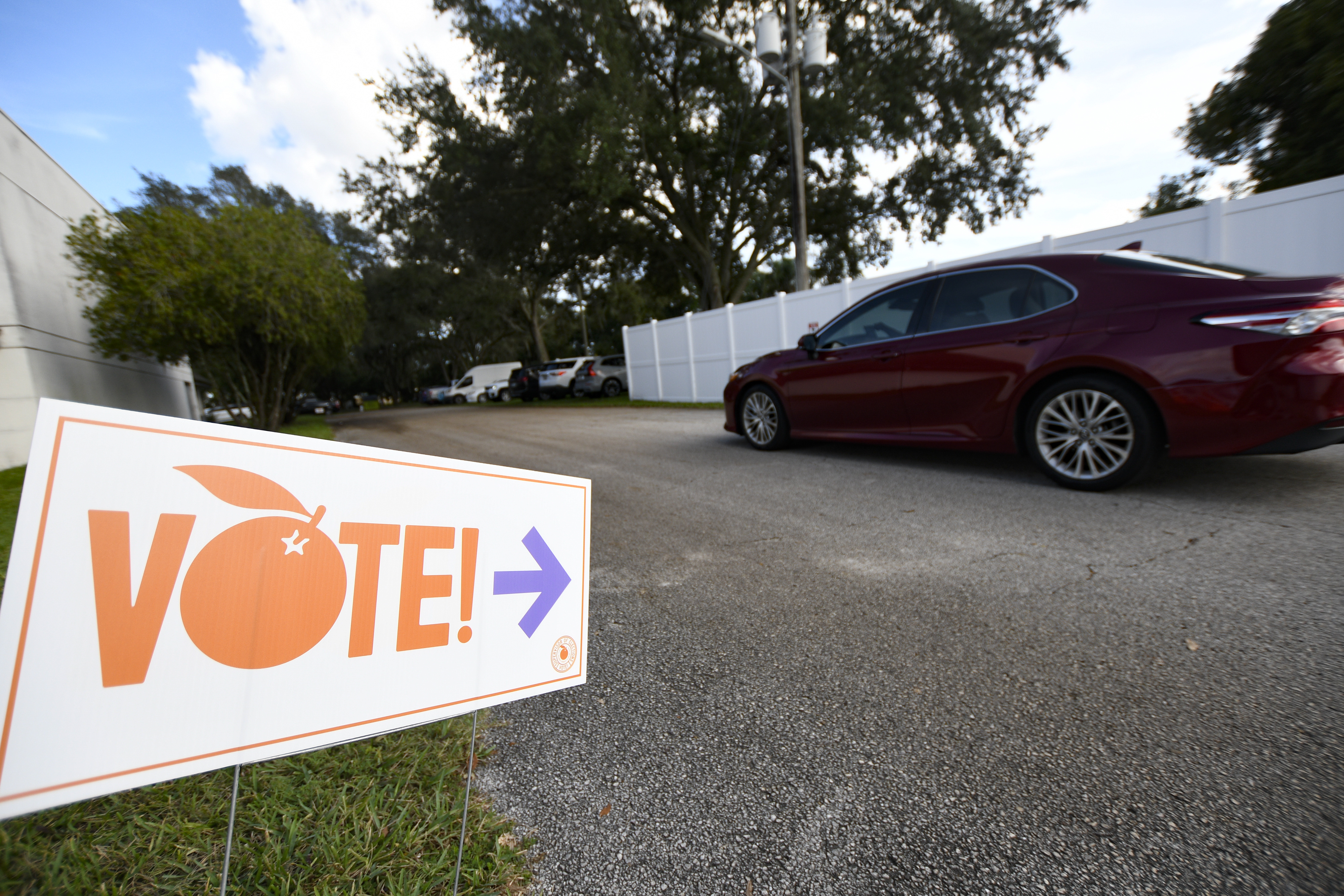
Florida voters moved on housing costs and approved a phased-in $250,000 homestead exemption to limit property taxes except those used to fund public schools.
The vote on Florida's Amendment 3, according to an Associated Press tally, was 62% in favor.
Such measures have ripple effects on state budgets for years. The Tax Foundation warned that Florida's move leaves "local governments in the lurch and incentivizes them to raise rates on property still in the tax base or to generate more revenue from less economically efficient taxes."
Other states voted to keep things where they are.
Massachusetts voters appeared on track to reject an effort to expand the state's so-called revenue limit, which, if approved, could have resulted in smaller tax refunds.
Oklahoma rejected a plan this week to change property tax assessment limits. Wyoming voted in a similar direction, rejecting a plan that would have established a new 50% property tax exemption for homeowners.
Missouri also rejected a state income tax measure this summer that would have phased it out entirely.
Ben Werschkul is a Washington correspondent for Yahoo Finance.
This article originally appeared on Yahoo Finance at https://finance.yahoo.com/economy/article/tax-the-rich-wins-in-ballot-measures-across-the-us-201650510.htmlMeet Nithya Raman, the democratic socialist who will be Los Angeles's next mayor 5 Nov 2026, 7:50 pm

Nithya Raman on Thursday unseated Los Angeles mayor Karen Bass after a neck-and-neck race for the leadership for the US’s second largest city.
Related: Democratic socialist Nithya Raman wins Los Angeles mayoral race over incumbent Karen Bass
The young progressive’s victory means that the two largest cities in the US, as well the nation’s capital, Washington DC, have now all elected democratic socialist mayors.
Though Raman’s political ascendance in Los Angeles has sparked many comparisons to New York City’s mayor Zohran Mamdani, her political profile in her home town is very different from Mamdani’s, as is her often tense relationship with the local chapter of the Democratic Socialists of America.
Here’s some key facts about LA’s new mayor:
Raman broke into politics in 2020 by unseating an establishment Democrat on LA’s powerful city council.
When Raman, an urban planner and political outsider, won a seat on LA’s city council in 2020, it was the first time that a sitting city council member had been ousted in 17 years. One LA political analyst called her win “a political earthquake”. Raman, whose campaign was endorsed by Bernie Sanders, was also the first DSA-endorsed candidate elected to office in Los Angeles. Raman credited her 2020 win to on-the-ground grassroots organizing, telling the Guardian at the time: “We knocked on 80,000 doors, which as far as we know, is a record. By the general election, we had 2,000 volunteers over all. We had 1,000 people just in our Slack.”
She has close ties to Hollywood progressives, including an endorsement from the Hollywood writers’ guild.
At the height of the #MeToo era, Raman served as the entertainment director for the Time’s Up, the organization founded by powerful women in Hollywood that created a legal defense fund for women in all professions to fight back against pervasive sexual assault and sexual harassment.
While older Hollywood celebrities such as Jane Fonda and Samuel L Jackson endorsed Bass, Raman secured endorsements from younger celebrities and comedians such as Mindy Kaling, Adam Scott, and Jaboukie Young-White. Raman’s husband, Vali Chandrasekaran, is a longtime TV writer.
She has also received attention from one very prominent celebrity Republican, former California governor Arnold Schwarzenegger, with whom she had “a widely publicized private meeting”.
Raman’s key issues are housing policy, homelessness and tenants’ rights.
Raman, an urban planner, has said she joined DSA-LA, which she did in 2019, not because of an “ideological drive”, but “because it was one of the only organizations that was meaningfully talking about housing affordability in the city”. Her mayoral platform calls for building more housing “at all income levels, everything from deed-restricted affordable housing to market-rate housing to social housing to homeless shelters”.
Her goal is to triple annual housing construction in the city, an approach that earned her an endorsement from advocacy group Yimby Action, which believes the best answer to housing affordability is simply building as much housing as possible.
Before she ran for office, Raman co-founded a still-active volunteer organization to help unhoused people in north-east LA.
In 2017, Raman was one of five co-founders of the SELAH Neighborhood Homeless Coalition, a group that organizes local volunteers in north-east LA to do outreach and advocacy with their unhoused neighbors. The group, which is still active and now claims 800 volunteers, is focused on recognizing “unhoused individuals as fellow members of our community worthy of the same dignity, respect and representation afforded to any housed person”.
Raman won the mayoral race despite a conspicuous lack of support from her city council colleagues – even the fellow democratic socialists on the council.
In a mayoral debate with Raman, Bass, her opponent, brought up Raman’s lack of support from other city council members and city leaders, saying: “Your colleagues have a very difficult time working with you.” The three other democratic socialists who were elected to the LA city council after Raman all endorsed Bass for mayor.
“So the establishment doesn’t like Raman: so what?” Los Angeles Times columnist Gustavo Arellano wrote, arguing that Raman’s outsider status was precisely what voters frustrated with LA’s Democratic political establishment wanted.
Raman, who was among the politicians revealed to have been targeted by establishment Democrats in the 2022 LA city hall audio tape leak scandal, won reelection to the city council in 2024 by a large margin.
At Raman’s election night party, “the political class of Los Angeles was absent,” Kurt Peterson, one of the leaders of hospitality union Unite Here local 11, which endorsed Raman, told Politico. But, he added: “Even though every city councilperson said they were standing with Karen Bass, not very many of the people they represent followed them to the polls.”
While DSA-LA ultimately did endorse Raman for mayor, the endorsement was … complicated.
The local chapter of the DSA did not endorse Raman during the primary, when she entered the race at the last minute after previously endorsing Bass.
After she beat out reality star Spencer Pratt for second place and advanced into the runoff against Bass, DSA-LA did “enthusiastically” endorse her, but noted that “Councilmember Raman’s relationship with DSA-LA, and the broader Angeleno grassroots left, has had some ups and downs”. Among Raman’s downs was “an inconsistent position on Palestine, which eventually resulted in conflict with the chapter over a 2024 endorsement from a pro-Israel Dem club”, the group wrote in its voter guide, noting that they believed she had since “worked with us to improve on this issue”.
But Raman’s DSA-LA endorsement was almost rescinded in a vote of national DSA organizers over her stance on Israel, the Los Angeles Times reported, with a national political committee voting 14-13 against rescinding the local endorsement in early November.
Despite the endorsement drama, DSA-LA was quick to celebrate Raman’s victory, posting a photo captioned, “YUP, that’s our mayor!!!” even before the Associated Press had called the election in her favor.
Raman is proud of her willingness to break with allies and take ‘unpopular’ positions.
Raman touts her political independence – including her willingness to vote against her allies on key policy issues – as the heart of her political identity.
She broke with the DSA on her belief that LA’s mansion tax, which brought in less revenue than supporters had hoped, needed to be reformed, which she called an “extremely unpopular sentiment”.
One Hollywood comedian who supports Raman contrasted her with Mamdani by saying, “She’s not ideological. She’s a wonk,” Vanity Fair reported.
Raman said she was “grateful” for comparisons to Mamdani, but “I am myself”.
In recent interviews, Raman has emphasized her political distance from the DSA.
“The mayoral candidate said she favors the Scandinavian model of social democracy, signaling a belief in a regulated free-market economy rather than the more explicitly anti-capitalist vision embraced by many in the DSA,” Vanity Fair wrote in an October profile.
Asked about comparisons to New York’s democratic socialist mayor, Raman said: “Mamdani is one of the most popular politicians in America right now, and I’m very grateful to be compared to someone who is that skilled as a communicator and a leader. But I am different. I am myself.”
This article originally appeared on The Guardian at https://www.yahoo.com/news/politics/articles/nithya-raman-democratic-socialist-los-195038269.html
Meghan Markle's half-brother named person of interest in father's abuse case 5 Nov 2026, 4:46 pm
Meghan Markle's half-brother, Thomas Markle Jr., is a "person of interest" in an investigation by police in the Philippines into alleged child sexual abuse material linked to their father, Thomas Markle, the country's interior secretary said Thursday.
Interior Secretary Jonvic Remulla told reporters at a press conference in Manila that authorities were examining whether Markle Jr., 60, was involved but that he was not currently considered a suspect. "We will know in the next week," he said in a video shared by Reuters.
"There are signs that point that the son is involved in the crime as well, but only as a person of interest so far," he said, adding that "he is not currently considered a suspect."
Thomas Markle, 82, has been under investigation since October in the Philippines over allegations that he possessed child sexual abuse material. He has not been charged.
The Sun first reported that Markle Jr. told Philippine police that after his father left the Philippines in May, he discovered images of child sexual abuse material among boxes at his father's former home in Cebu.
Remulla told AFP on Oct. 24 that police inspected Markle Sr.'s former home in Cebu following a report from his son and found a "trove" of suspected child sexual abuse material and a laptop.
Markle Sr. has vehemently denied the allegations against him, telling the British newspaper the Daily Mail on Oct. 23: "It's just a bunch of lies. It's sick."
In an interview with the Daily Mail, he said the computers had not been in his possession since he left Mexico in January 2025 and that he did not know who had access to them. He said he would welcome a forensic examination of the devices.
In a separate interview with the Daily Mail's sister paper, the Mail on Sunday, he said: "I have never had sex with anyone under the age of 18." He added that if there was anything bad on his devices, "it was put there by someone else," according to the British newspaper the Daily Telegraph.
Remulla told the British newspaper the Guardian on Oct. 25 that investigators were considering all angles because the case involved a family dispute, while stressing that a full forensic examination would give a "definitive picture."
"We want to be sure before we release the findings," he added.
The FBI told Yahoo it was "aware of the allegations and will provide support, as appropriate, to the Philippine authorities. We will also investigate any related allegations of federal violations of U.S. law."
What do we know about Thomas Markle Jr.?
Thomas Markle Jr., 60, is Meghan's half-brother and the son of Thomas Markle and his first wife, Roslyn Loveless. He has a sister, Samantha Markle.
Markle Jr. had been caring for his father in the Philippines, where he reported him to Philippine police.
Remulla said police had received information about underage girls reportedly being brought to Markle Jr.'s home in Cordova, in the Philippines. "We have witnesses that underage girls are brought to his house and we are following it up," he said.
Shortly after the investigation into his father was announced, Markle Jr. apologized to his sister for siding with their father during their years-long estrangement, telling the Sun on Sunday that he was "so, so sorry." He said: "I now know I have been protecting the wrong person for the past nine years."
Recalling looking after Meghan when she was a child, he asked her to accept his apology and wished her family well.
Markle Jr. has not been charged.
Meghan was sent letter containing allegations in 2019
After the allegations in the Philippines came to light, Meghan said in a public statement issued on Oct. 23 that she was "deeply distressed" by the allegations that had emerged against her father. "My thoughts are with any children who may have been harmed," she said.
It subsequently emerged that officers at London’s Metropolitan Police passed on a letter to Meghan in early 2019 that informed of her of allegations about her father.
"It made troubling and disturbing allegations against my father and I was given assurances that these were being investigated," she said. British police said it had not shared the letter with other law enforcement agencies.
According to British tabloid the Sun on Sunday, Meghan was advised that speaking publicly could jeopardize any potential legal case.
Addressing her decision to keep Archie and Lilibet away from their grandfather over the past few years, Meghan said that "any distance from my father, and my choice to not allow him to have contact with our children, was for one reason: to protect them."
She added: "My sincerest hope is that justice will be fully served and that the priority remains the safety and protection of innocent children."
Meghan reportedly wrote to her estranged father in December 2025 to tell him she was aware of child abuse allegations against him and would not allow him to meet his grandchildren. Meghan reportedly told her father the letter would be the last time he heard from her.
According to the Sun on Sunday, and also reported by the BBC and the Daily Telegraph, the Duchess of Sussex sent the letter to Thomas Markle while he was hospitalized in the Philippines following a leg amputation in December 2025 after a blood clot.
This article originally appeared on Yahoo News at https://www.yahoo.com/news/world/article/meghan-markles-half-brother-thomas-named-a-person-of-interest-in-investigation-into-child-sexual-abuse-material-involving-their-father-170501983.htmlExperts call wreckage found miles from deadly Learjet crash a 'huge clue' 5 Nov 2026, 2:51 pm
A complex mission lies ahead for investigators trying to determine why a Learjet dove into the ground and exploded in South Florida, killing nine people, including two children.
How did the pilots lose control of the aircraft? Did the jet go into a "Mach tuck," its nose suddenly pitching downward in a trajectory nearly impossible to recover from? What role did icing play in the fatal fall from the sky?
Investigators will scrutinize the towering and turbulent storm the jet encountered, every aircraft piece recovered and every word the co-pilot spoke to air traffic controllers in the final minutes of her life, expert pilots told USA TODAY. Those experts said pilots of the mid-sized high-altitude Learjet may have faced little margin for error in difficult flying conditions, raising concerns about "Mach tuck," an infamous nose-down flying condition.
"Every single one of those pieces will be a clue in putting this whole picture together," said Hassan Shahidi, president and CEO of the Flight Safety Foundation.
The Nov. 1 crash killed the pilot, co-pilot and seven passengers bound for the Bahamas when the Learjet 60 plunged to the ground at more than 300 mph and exploded into a fireball.
National Transportation Safety Board investigators are pleading with the public for recovery of any piece of the wreckage that’s found. Sometimes, the linchpin in an investigation can be just one screw.
Most of the Learjet 60’s left elevator – a movable control surface on the horizontal stabilizer – was recovered in three pieces within one to four miles of the crash site, the NTSB announced Nov. 3.
It was a "huge clue," said Robert Joslin, associate professor with Embry-Riddle Aeronautical University’s College of Aviation.
The pieces show at least one important part of the aircraft separated before impact. But investigators don’t know whether it separated before or after the loss of control of the aircraft, identified as N722BD.
Moment by moment: How a Learjet passenger plane crashed in Florida
High-flying aircraft can leave little margin for error
As co-pilot Nathalia Filguieras, 20, described what was happening inside the Learjet to air traffic controllers, she said they were experiencing "overspeed."
Investigators will try to decipher exactly what prompted the overspeed, a condition when an aircraft is moving faster than safe or faster than its certified maximum.
Joslin and the other professional pilots who talked with USA TODAY did not speculate about the specific circumstances. But they said Learjets in general are known for being challenging in certain situations.
Learjets are capable of flying in thin air, high above the altitudes inhabited by many other planes. In the high-speed, high-altitude environment the jets can fly in, they operate with narrower margins of error than other planes at lower altitudes, Joslin said.
A Federal Aviation Administration directive once noted a Learjet could have "marginal controllability" when reaching above maximum suggested speeds.
It’s too soon to say what sequence of events led to the overspeed and crash of N722BD.
In the narrow operating margin of high-speed, high-altitude flight, an aircraft could fly too slow and wind up in a dangerous stall, Shahidi said. Or flying too fast can produce aerodynamic instability that puts pressure on the structure of the airplane.
"This is something investigators will be looking at very closely," he said.
What is 'Mach tuck'?
One rare event that can occur is a "Mach tuck," when aerodynamic changes cause the nose to tuck down in a position that’s difficult, if not impossible, to come out of.
Another term popping up in conversations about the crash is "coffin corner." That’s the point at which there’s little leeway for pilots to operate and it’s a position pilots try to avoid, Joslin said. It’s the point in altitude when the difference between the slow speed at which a stall can occur and the maximum recommended speed approaches zero.
Joslin trained in the military to get out of a spin, but once an aircraft experiences an event that puts the aircraft nose down into a diving position, it changes the dynamics so much that it would be "very difficult to come out of," he said.
Safety advances have reduced the number of such events that occur, pilots said.

Weather can narrow safety margins
The weather remains a major question, Shahidi said. Turbulence, either in clear air or storms, can narrow a Learjet’s margin of error even further, by causing the aircraft to exceed its airspeed envelope.
The air ahead of this flight was anything but clear. The thunderstorm over Palm Beach County very rapidly reached a very high altitude, up to 40,000 feet, Shahidi said. Investigators will analyze what was happening with the turbulence inside that storm and whether it caused a loss of control in the aircraft.
Ice buildup reported on the aircraft also will be an important part of the investigation, because it could have contributed to the loss of control of the jet, Shahidi said.
A Learjet’s thin wings are more prone to ice buildup than some other aircraft, Joslin said. "So all these things make it very challenging and once you get up in that thin air, you don’t have the capability, because of its design, to maneuver without going outside the envelope."

Some previous nose-down crashes share similarities
Based on NTSB reports, two similar nose-down crashes occurred in 1980 and 1981, both after reportedly encountering clear air turbulence.
In May 1980, a Learjet 25D crashed into the Gulf, killing both people on board, after the pilot reported the aircraft was in a spin. The NTSB concluded the aircraft flying beyond its Mach limits contributed to the crash, describing the "Mach tuck" that can occur when the wing’s center of pressure moves and results in a nose-down pitching moment.
A Learjet 24 crashed near Felt, Oklahoma on Oct. 1, 1981, killing two people on board. The NTSB attributed part of the crash to the aircraft’s marginal controllability characteristics when flown beyond its Mach limits, resulting in a loss of control.
In an emergency 2003 airworthiness directive, the FAA said a Learjet Model 45 had experienced a severe vibration incident, followed by a sudden nose-down pitch. An investigation revealed a screw on the horizontal stabilizer actuator assembly had fractured and a threaded nut in a secondary retaining rod had worked off, resulting in the loss of control of the aircraft.
That structural failure could result in the loss of control of an aircraft, the FAA warned, advising immediate inspections.
An 'absolutely critical' piece of the investigation
NTSB investigations can sometimes be lengthy and it could be months before the world learns whether aerodynamics, the weather, a failed part or something else entirely played a role in the downward plunge of N722BD.
Every fatal crash is sad, but experienced pilots who have heard the air traffic control audio that went public describe it as one of the most harrowing they’ve ever heard.
"It’s just awful. When you hear the voice of the co-pilot doing her job very well under these circumstances, it’s just unbelievable," Shahidi said. "I can’t imagine anyone being able to perform as she did, absolutely flawless."
But, he added, the information she provided will be "absolutely critical."
Dinah Voyles Pulver covers climate change, disasters, environment and other news for USA TODAY. Reach her at dpulver@usatoday.com
This article originally appeared on USA TODAY: 'Huge clue'? Experts unravel a mysterious, tragic nose-down jet crash
This article originally appeared on USA TODAY at https://www.usatoday.com/story/news/nation/2026/11/05/florida-learjet-crash-cause-experts/92605793007/
Vance and DeSantis make quick moves to jumpstart 2028 race after tough GOP midterms 5 Nov 2026, 10:00 am

Vice President JD Vance’s seemingly straightforward path to succeeding President Donald Trump suddenly looks much murkier.
The Republican shellacking in Tuesday’s midterm elections has quickly triggered a public reckoning within the GOP over Trump’s place in the future of the party — one that threatens to complicate Vance’s efforts to consolidate party support behind a widely anticipated White House bid.
Vance appeared to recognize the danger Wednesday morning, blaming the party’s sweeping losses on the war with Iran and distancing himself from Trump’s unpopular foreign policy decisions. In a lengthy post on X, Vance appeared to sketch out what the foundations for his own 2028 platform, centered on ending the war, tackling affordability, refocusing on domestic challenges and reconsidering America’s relationship with Israel.
“To the people who are just pissed at the results, you should be,” he wrote. “Let’s take that anger and get back to the work of saving our country.”
But there are already signs that there may be a widening lane for someone outside the administration to seize the nomination in 2028.
Former House Speaker Newt Gingrich wrote Wednesday on X that “the scale of the Republican defeat is so great that it makes the race for the GOP presidential nomination wide open.” In the post, he ripped Vance for defending an ad from Ohio Republican gubernatorial candidate Vivek Ramaswamy that featured the estranged mother of his Democratic opponent, Amy Acton. The ad received bipartisan blowback and on Tuesday, Acton defeated Ramaswamy.
“A good bit of the luster has come off the bloom,” Gingrich wrote.
Bob Vander Plaats, an influential conservative leader in Iowa, where Republicans will have the first say in choosing their next nominee, predicted the losses would embolden presidential hopefuls from across the party to test the waters. By next year, he said, the field could rival the crowded 2016 Republican primary.
“There are a lot of people now who will be making the case they can take this baton and move us forward,” Vander Plaats said.
A longtime Republican operative in New Hampshire, who asked not to be named, said the prospect of Vance running as a third Trump term looks increasingly “problematic” after Tuesday. The operative also expected voters in the nation’s first primary will give other candidates a serious look.
DeSantis tries to carve a lane
Florida Gov. Ron DeSantis, in particular, has wasted little time seizing the party’s historic defeats to revive interest in his own political future. DeSantis unsuccessfully challenged Trump for the GOP nomination in 2024 and, before Tuesday, had seen his stock diminish as his time in public office came to a close.

But DeSantis in recent days has received renewed attention for his pointed critique of Trump’s second stint in Washington.
In a lengthy interview with Stephen A. Smith released on the eve of the election, DeSantis accused the Trump administration of gaslighting voters, failing to tackle Washington corruption and botching its immigration rollout. He challenged Republicans to rethink their relationship with Big Tech and heed growing concerns about data centers and artificial intelligence — a notable shot at an industry that is close to Vance.
On Wednesday, DeSantis called the midterms an “extinction-level event for Republicans,” while touting that Florida “was able to hold the line.” Republican nominees for governor and Senate narrowly survived, but DeSantis’ efforts to net his party more congressional seats via redistricting appear to have fallen short.
Several people involved in DeSantis’ 2024 presidential campaign told CNN that his movements in the past 48 hours were interpreted within his orbit as keeping the door open to another White House bid. On Wednesday, DeSantis declined to discuss his future and told CNN he will “be a free man” in January.
DeSantis wasn’t the only ambitious Republican rushing to rationalize the midterm losses. Texas Sen. Ted Cruz, who, said Wednesday on his popular “Verdict” podcast after his state saw massive GOP losses that “too many in politics dismissed” affordability concerns — an issue Trump himself regularly insisted was a manufactured problem.
“Understandably people were pissed off and elected Republicans didn’t do enough to address their very real pain,” he said.


Meanwhile, outgoing Georgia Gov. Brian Kemp, a Trump antagonist, on Wednesday laid out his own vision for the party centered on the “conservative principles of our party.”
“It’s time we get back to those principles in the months and years to come,” Kemp wrote.
A GOP operative in neighboring South Carolina, another early-nominating state, told CNN after seeing Kemp’s post: “He’s running.” The person noted that Kemp recently appeared in the Palmetto State to help campaign for the Republican gubernatorial candidate there, Attorney General Alan Wilson, who won on Tuesday.
Vance’s calculus
To be sure, Vance remains the clear front-runner for the GOP nomination. Primary voters typically are considerably deferential to vice presidents. Vance would bring other advantages to a protracted nomination battle, including a close relationship with the party’s biggest donors after serving as Republican National Committee finance chair for the past 20 months.
He also has the backing of Turning Point USA, the organization founded by the late conservative activist Charlie Kirk, that is seen as a turnkey political operation for Vance if he wants it. However, the group’s political influence took a hit in the midterms as well. Republicans suffered heavy losses in states where the group is especially active, and it went all-in on Republican Andy Biggs, who is on track to the lose the Arizona governor race by double digits. A spokesman for Turning Point didn’t return a request for comment.
Vance presumably would run with Trump’s support — an endorsement Vance recently said he expects to receive but has yet to come. Trump does not appear especially eager to pass the torch and has at times floated other names as potential successors, most notably Secretary of State Marco Rubio.
The former Florida senator remains of favorite of many establishment figures in the GOP and has created new fans among the MAGA faithful, but it’s not clear that he wants to run and has said in the past he wouldn’t go up against Vance. As a key player in Trump’s administration, especially on foreign policy, Rubio could face similar headwinds as Vance running to succeed him.
Despite his platform-like statement Wednesday, it isn’t a sure thing that Vance will seek the nomination either. Vance himself has said he would wait until after the midterms to make that decision and close allies have publicly and privately suggested that Tuesday’s outcome is likely to factor into that calculus.
Trump said Wednesday he remains in the dark on Vance’s plans.
“Maybe he won’t run,” Trump said as he showed off construction for his White House ballroom. “I don’t know who is going to run.”

A wide-open field?
If Vance ultimately forgoes a White House bid, a chaotic race to replace Trump would surely follow. Several members of Trump’s own Cabinet harbor presidential ambitions – including Health and Human Services Secretary Robert F. Kennedy, Jr. and Defense Secretary Pete Hegseth – and it’s unclear they would run unless Vance decided against it. Hegseth is also facing renewed criticism from his party over the war with Iran and could face an impeachment vote in the House as soon as next week, CNN reported Wednesday.
The political movements of conservative commentator Tucker Carlson remain a source of intrigue among Republicans as well. Carlson, a close friend of Vance, remains publicly supportive of the vice president and has said he won’t seek the presidency. But he has also floated the creation of a third party, and supporters like former Rep. Marjorie Taylor Greene have encouraged him to run.
In Iowa, as voters weighed in on the midterms, some future caucus-goers were already ready to look beyond Trump as they consider who replaces him.
“I want to get away from that idea of ‘Trump Republican,’ and just get back to Republican-conservative,” said David McDonald, a 59-year-old meat cutter from Des Moines told CNN.
Marion, Iowa, retiree Rich Sidman acknowledged the future of the GOP will come down to how Trump fares over the next two years.
“It’s all about the economy, the economy, the economy,” Sidman said.
He’s bullish, though, on Vance after seeing him speak during the vice president’s recent campaign swing through Iowa. And if the caucuses were today, that’s who Sidman would vote for.
What about DeSantis — who made Iowa a second home in 2023 as he tried to seize the party from Trump?
Sidman thought for a moment, then said: “I wouldn’t mind seeing DeSantis either.”
CNN’s Dianne Gallagher, Betsy Klein and Patrick Svitek contributed to this report.
For more CNN news and newsletters create an account at CNN.com
This article originally appeared on CNN at https://www.cnn.com/2026/11/05/politics/midterms-vance-desantis-rubio-2028-race
Page processed in 0.232 seconds.
Powered by supersurge.com. © 2004–2026. In cooperation with Fresh Content. Based on SimplePie by Ryan Parman and Geoffrey Sneddon, and licensed under the BSD License.